Bunny Ears Cactus
Opuntia microdasys · also called Polka dot cactus, Angel's wings
Fuzzy-looking cactus pads that you should never stroke
- Light
- Bright indirect, Full sun: Full sun, the brightest window you have
- Water
- Every 2-4 weeks in summer, barely at all in winter
- Difficulty
- Easy
- Pet safety
- Non-toxic to cats and dogs
- Size
- Small
- Height
- 1-2 ft in a pot
- Growth
- Slow
- Humidity
- Dry air is best
- Temperature
- 65-90°F in summer, 50-65°F winter rest
- Good rooms
- Kitchen, Living room, Office
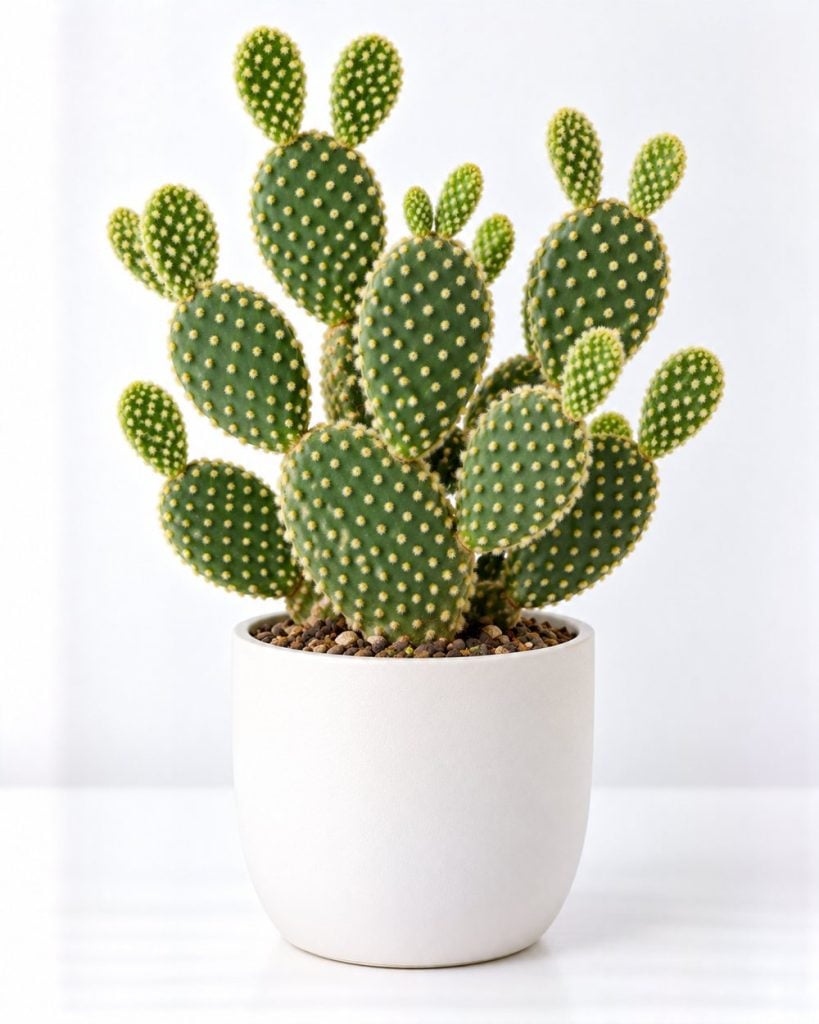
Do not pet it. That is the one rule. Bunny ears cactus has flat, oval pads covered in neat rows of soft-looking dots, and from a few feet away they look like velvet. Those dots are clusters of tiny barbed bristles called glochids. They come loose at the lightest touch and lodge in your skin, where they itch for days and are hard to see. Gloves, kitchen tongs, or a folded towel are the way to handle it.
It has no long spines, which is why it looks so friendly. The pads grow in pairs on top of each other, so a young plant really does look like a rabbit's head. Over the years it builds into a branching clump, often 1 to 2 feet tall in a pot. The bristles come in golden yellow, white, or a rusty red. It is a desert cactus from Mexico, and it wants your sunniest window and very little water.
It suits a dry, bright spot, like a south window in a home office, and someone who forgets plants for weeks. The ASPCA lists Opuntia cacti as non-toxic to cats and dogs. The bristles are the real risk for pets. A curious cat or dog can get them in its nose, lips, or paws, which hurts and may need a vet to remove. In a home with nosy pets, a high, sunny shelf is the safe choice.
Bunny Ears Cactus care
Light
Full sun is what it wants. A south or west window with several hours of direct light is best. In weak light the new pads grow narrow, pale, and floppy, and they will not fix themselves later. A strong grow light can stand in for a poor window.
Watering
Water deeply only when the soil is dry all the way through. In a hot, sunny summer that may be every two weeks. From late fall to early spring, give it a small sip once a month at most, or none in a cool room. Wet soil in winter kills more cacti than anything else.
Soil and pot
Use a cactus mix with extra grit, like perlite or pumice. A clay pot with a large drain hole is ideal. The pot should be only a little wider than the clump, so the soil dries quickly after watering. Top the soil with a layer of small gravel to keep the base of the pads dry.
Humidity and temperature
Dry air is perfect. This is a plant for the room where other plants get crispy. Keep it out of bathrooms and away from humidifiers, since damp, still air can lead to rot on the pads. A sunny desk by a heater is fine for this one.
Feeding
Opuntia is built for poor desert soil. In spring, once you see new pads forming, give one dose of cactus fertilizer at half strength, and maybe a second in midsummer if it is growing well. That keeps the pads firm and compact. Big, floppy pads that tip over usually mean too much food or too little sun. No feeding while it rests in winter.
Repotting
Repot every two or three years in spring, when it gets top heavy or crowded. Wrap the clump in folded newspaper or grip it with tongs, and wear thick gloves. Start with dry soil, and wait a week before the first watering.
Propagation
Pick a healthy pad, then twist or cut it off where it joins the plant, using tongs. Leave it on a dry surface for about a week until the cut end forms a callus, a dry skin over the wound. Then set it upright in dry cactus mix. Water lightly once it resists a gentle tug.
Common problems
I touched it and now my fingers itch. What helps?
Press a strip of sticky tape over the spot and peel it off, which pulls out many bristles. Tweezers can grab the bigger ones. Wash the skin well afterward.
The new pads are thin and pale.
That is stretching from low light. Move it to a sunnier window. A stretched pad stays stretched, so you can cut the weak ones off and root them.
Why is the base of the plant turning brown and soft?
Soft, dark tissue at the soil line means rot from wet soil. Save any firm pads to root, and throw out the rest with its soil. Next time, water less often, mostly in winter.
There are corky tan patches on the older pads.
Firm, tan, bark-like patches low on old pads are often normal aging. If the patches are soft or spreading on young pads, look for scale insects or rot.
Frequently asked questions
Does bunny ears cactus flower indoors?
Rarely. It can bloom with yellow flowers in early summer, but it needs strong sun and a cool, dry winter rest. Most indoor plants never bloom, and that is fine.
Is it safe in a kid's room?
It is not poisonous, but the bristles are a real nuisance for small hands. Put it somewhere children cannot reach until they are old enough to leave it alone.
How big will it get?
In a pot, usually 1 to 2 feet tall and a bit wider. Planted outdoors in warm, dry places, it can form clumps 2 to 3 feet tall and much wider.
Not sure this plant fits your home?
Take a plant quizSources: plants.ces.ncsu.edu, www.aspca.org, www.aspca.org